A kép illusztráció
Szállítás:
Azonnal
Elérhető nálunk:
.ePub formátumban
Borító ár:
10 465 Ft
Rendeléskor fizetendő online ár:
9 942 Ft
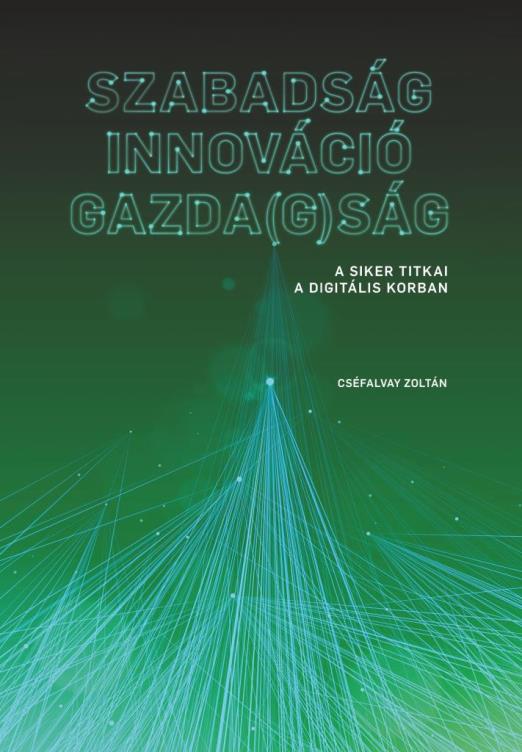
Why is it that we cannot predict the technological future? Is the destruction of the old truly an inevitable companion to the birth of the new? Are our reservations about new technologies justified? How will artificial intelligence reshape economic competition among nations? Can the state have any meaningful active role in innovation at all? Why has Europe fallen behind in the innovation race? And why does an invisible iron curtain still exist, one that keeps Central and Eastern Europe from competing with new startups in the global innovation arena? What can we learn from the success of Silicon Valley, Estonia, Israel, or Singapore?
These questions continue to captivate economists, policymakers, and the wider public alike because the past 250 years have clearly shown that the countries that made it into the club of the wealthy were those at the forefront of technological innovation, while the others remained confined in the low- or middle-income trap.
Through a comprehensive exploration encompassing illuminating examples and statistical analysis, Zoltán Cséfalvay examines the connections between free competition, the digital economy, technological progress, and innovation, and how their complex dynamics lead to success in the competition among nations.
Leírás
Raktári kód:
241245
ISBN:
9789636441609
EAN:
9789636441609
Gyártó kód:
43501
Megjelenés:
2026.
Oldalszám:
460
Nyelv:
angol
Why is it that we cannot predict the technological future? Is the destruction of the old truly an inevitable companion to the birth of the new? Are our reservations about new technologies justified? How will artificial intelligence reshape economic competition among nations? Can the state have any meaningful active role in innovation at all? Why has Europe fallen behind in the innovation race? And why does an invisible iron curtain still exist, one that keeps Central and Eastern Europe from competing with new startups in the global innovation arena? What can we learn from the success of Silicon Valley, Estonia, Israel, or Singapore?
These questions continue to captivate economists, policymakers, and the wider public alike because the past 250 years have clearly shown that the countries that made it into the club of the wealthy were those at the forefront of technological innovation, while the others remained confined in the low- or middle-income trap.
Through a comprehensive exploration encompassing illuminating examples and statistical analysis, Zoltán Cséfalvay examines the connections between free competition, the digital economy, technological progress, and innovation, and how their complex dynamics lead to success in the competition among nations.
Prof. Dr. Zoltán Cséfalvay heads the Centre for Next Technological Futures at Mathias Corvinus Collegium (Budapest), where he gives lectures and conducts research on digitalisation, robotisation, and artificial intelligence in Europe. Previously, he worked as a senior researcher at the Joint Research Centre of the European Commission in Seville (2019–2020). He served as the Hungarian ambassador to the OECD and UNESCO in Paris (2014–2018) and as Minister of State for Economic Strategy in Hungary (2010–2014). He was Professor of Economic Geography at Andrássy University Budapest (2002–2010) and Professor at Kodolányi János University in Hungary for more than two decades. As a research fellow, he worked in Budapest, Vienna, Munich, Heidelberg, and Cardiff. He is the author of 15 books and more than 80 articles in edited books and peer-reviewed journals in English, German, and Hungarian. He recently published his latest book—FREEDOM, INNOVATION, PROSPERITY: The Secrets of Success in the Digital Era—about the impact of the current wave of new technologies on business, society, and geopolitics.
Vélemények